About us
At Limina, we are a full-service company dedicated to supporting the education and training sector with innovative, impactful solutions. From designing immersive learning experiences to delivering tailored services, we aim to open opportunities for all and inspire meaningful change.
Our agile, collaborative approach ensures that every project is contextually relevant and actionable. By working closely with stakeholders, we develop dynamic solutions—whether courses, platforms, or resources—that captivate, engage, and empower learners to achieve their full potential. Together, we’re shaping a future of life-long learning, growth, and success.
Official Moodle™ Certified PartnerWe’re proud to be one of only four companies in Africa accredited as a Certified Moodle Partner. This global recognition from Moodle HQ confirms Limina’s proven expertise in delivering secure, scalable, and fully customised learning management systems using Moodle. Whether cloud-based or offline, our solutions meet the highest international standards—combining technical excellence with deep contextual understanding across sectors. When you partner with Limina, you’re partnering with a trusted Moodle expert.

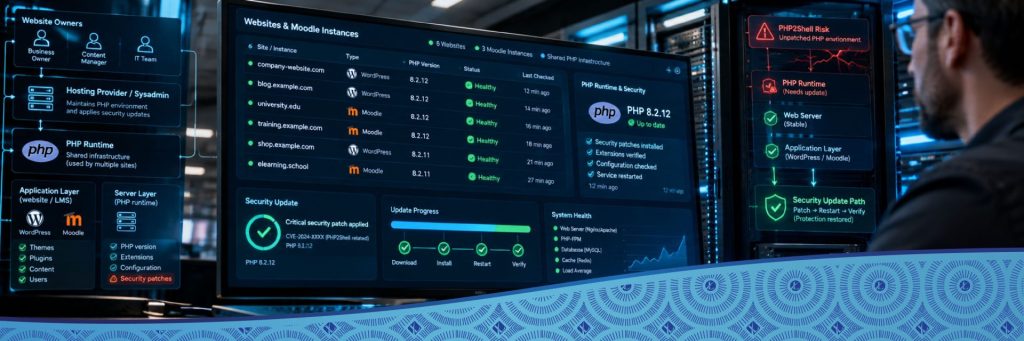
A fully managed LMS — without the technical burden
Limina delivers a complete, supported Learning Management System, ready to use.
We handle:
– LMS setup and configuration
– Secure hosting and technical management
– Ongoing monthly support
There are no setup fees — you pay one simple monthly fee.
You get a reliable LMS that works from day one, without needing in-house technical expertise.
Our packages are built on Moodle, one of the world’s most trusted learning platforms.
Think back to an online course you clicked into. Perhaps a compliance module, a walkthrough of a new system, or an induction for a new role you started. Did it feel alive, or like a filing cabinet of content that someone had bolted onto the internet?
The difference between a ‘living’ course and a filing cabinet usually comes down to a single word: interaction. A course can hold excellent material and still feel completely dead. This is because reading pages of content, clicking through slide after slide is not the same as engaging with the learning. It’s this difference: between passively viewing vs actively learning, that we refer to as interaction.
The tools we use to train people seem to change every year. A new platform, new features, a fresh set of buzzwords at every conference. Then you attend the next training session or online class, and you’re back in 1920, complete with tables in rows and a presenter at the front using slides instead of a blackboard. This same ‘event’ plays out in school classrooms, university lecture halls and online training sessions with very little change.
Learning seems to have stubbornly refused to budge from age-old models that use lecture- style scenarios. What is more, most of the latest and greatest learning and assessment tools available merely replicate this lecture-style model. While the tools look shiny and sparkly, the underlying premise often stays pushing-of-content similar to that used in lecture-style classrooms.
Picture Sam and Stanley opening the same Moodle course on the same morning.
Sam clicks around, figures out the navigation, finds the activity, and gets on with it. He’s slightly irritated by the clunky layout, but he manages to complete the course quickly.
Stanley opens the course, can’t immediately find where to start, clicks something that doesn’t seem right, backs out, opens WhatsApp to ask Sam, gets no reply, tries a different button, lands somewhere unfamiliar, and closes the tab. Stanley believes he’ll try again later but later eventually becomes never.
The same course and content can have completely different outcomes, but in your analytics, both learners look identical, right up until one of them stops showing up entirely.